Thursday, October 27, 2011

We're Still Blaming The Victim?

cross posted from my media justice column

There’s been a lot of virtual attention towards a young 14 year-old Black woman from Alabama who was videotaped providing oral sex to her ex-boyfriend at their high school. As a Maryland native, this story being centered in Baltimore, hits home and remains enraging. Before I share more about this event, I want to share that two of the young men who participated in creating this video (which the young woman did NOT consent to) and then posted to the internets, have been arrested and the young woman has reportedly changed schools.

The young woman involved (and I’m purposefully not mentioning her name for many reasons, one she’s a minor, two she doesn’t need do a search and find this post about her, and three, it’s not important at this time) did not consent to having the video of her actions posted on the web. It’s unclear if she even consented to having the encounter videotaped, but what is clear is she is hurting, harassed, threatened, targeted, taunted, and isolated. To my knowledge the video is no longer available where it was originally posted (and I did not go searching for the video), however, some news outlets do have the video and use it when reporting on the story and blur out the images. In addition, one online site asked their readers (about 10,000 responded) if they would watch the video and 75% said they would! Unfortunately, there is still an interest in watching this encounter. Lots of conversations around cyber-bullying child pornography, and even sexting have emerged.

Youth responses
I have a love hate relationship with social media and situations such as this is one of those reasons. This is also a reason why some folks are against Net Neutrality (something I’ve encouraged us to consider and even support). Now, opponents of net neutrality would tell me there must be more of a social responsibility and accountability of some of these online spaces that host user content. I don’t think this is such a negative thing, however, how this is implemented is essential to understand and examine.

What I have seen are many youth responding to this situation in specific ways. There are folks who are clearly in support of the younsg woman and asking folks to stop harassing andbullying her. Then there are youth who are creating media of their own and posting it about the young woman (and no I’m not linking to any of them on purpose). Part of the cyber-bullying this young Black woman is experiencing is videos made of her, people reacting to watching the video, several young men (many of Color) creating raps, her first and last name becoming a verb, songs about the young woman, and even adults blaming her for her actions saying “she knew what would happen” and “she chose to perform this act.”

It troubles me because we still are in a society where people are UNCLEAR about what consent includes, what it means to obtain consent from someone, and what it means to violate someone and not obtain consent. I find it troubling that adults are blaming this young woman for experiencing bullying, threats, isolation because of her choice to perform oral sex. This sends many messages, one which is shaming of young women, women of Color in being sexual. Shaming folks has rarely ever had positive outcomes for all people involved, including especially the person it is targeted towards. People think they may be “helping,” or “just sharing their opinion,” or “stating the facts,” when in fact they are essentially rape apologists claiming “she asked for it” and “it’s her fault she is being treated” poorly. These are the same things we hear from people who blame victims and survivors of rape and sexual assault.

Sexting
I know that many of you don’t even think of sexting, instead maybe you think of seeing or sending naked pictures to other folks in your cell phone. Well, the legal term for that which older folks (who also participate in this activity) have come up for is sexting. I’ve shared some of the historical background that is connected to the legislation of sexting and how it is a crime before. I want to be clear that if you or someone you know is under 18 years old and things like this come into your cell phone/handheld device this will be considered a crime. If you are the person sending it you are the person who is considered doing the crime, the perpetuator. If you need or want more information on sexting check out my last article on the topic. Don’t think that just because you don’t know the rules/laws that they don’t apply to you, make sure these are clear and be careful! It’s part of the responsibility that comes with this type of technology today.

Speaking of responsibility, what role do our communities have and each of us individually have in these situations? Earlier this week Nicole Clark, MSW a social worker and sexual health activist/consultant for women and girls of color wrote a post called “Call To Action: Teens, Sex Tapes, and Why We’ve Got To Do Better” where she outlines four questions for readers about this current event and reality for the young woman involved. She writes:


What is the solution here? What can we do as adults to decrease the likelihood of incidences like this from occurring in the future? For one, we can stop sending mixed messages to young people about sex and sexuality. We can put the blame all we want on the media, rappers, models, music, videos, pop culture, social media, and magazines all we want, but young people are looking to the adults in their lives on how to behave.
I agree with Nicole’s perspective of ending mixed messages on sexuality and as adults, mentors, parents, educators who have young people in our lives taking some of this responsibility as well. Not just responsibility but accountability. We can blame the outlets and social media like Twitter, Facebook and Tumblr that allowed the video, bullying and harassment to continue (and some folks claim the young woman is using Twitter currently, although this has not been confirmed that it is actually her). However, there is a level of user accountability that we must also recognize. How do we talk to youth about how they behave online? Is it the same as how we teach them to behave in 3D? Why are they different? How can we figure out more solid and useful ways to discuss these methods?

Now, this incident is not isolated. Black women and women of Color have been targeted, harassed, threatened, bullied, isolated, shamed, silenced, violated, and victimized for being sexual beings in this country and world. We have not been protected the same way other women have, and even victimized by the same communities and organizations created to provide us some form of protection.

I believe the first things we must do is think about what consent means to us and then have conversations with others on the topic. How do folks have different definitions of consent? How do you obtain consent? What are the challenges to getting consent? What are the pleasures in getting consent? Then follow that up with a conversation with family members, community members, classmates, professors, mentors, and other folks in the communities of practice of which we have membership.

Next, think about what it means to have the privilege of social media, access to the internet, and how that gives us a unique yet important type of power. What are the ways we may practice power with versus power over in social media? How are these connected to our ideas of respect and I’m not saying this is an easy one as I see adults on social media acting out too!

Finally, what may we learn from young people about the uses and necessities of social media? I think it is important to look to young people as those experts who can help with creating solutions and holding their peers accountable. This is NOT just something that adults must do. It is something we ALL must do, it is all of our responsibility to speak out towards injustice, oppression, and isolation of young people because of a choice they made. To think it is up to adults to lead these efforts is a problem already. I’m committed to working with everyone in our community to challenge and find ways to make sure this does not happen again to another young person, young person of Color or community. What are ideas and ways others are working to help end these incidences as well?

Sunday, October 23, 2011

What's It Mean To Project Yourself?

cross posted from my Media Justice column

This weekend is the first Sisterhood Summit http://sisterhoodsummit.blackgirlproject.org/ presented by the Black Girl Project (BGP) of which I am a advisory board member. Created by Aiesha Turman (who did a media maker’s salon with me a while ago), the Black Girl Project provides educational and community based workshops and there is a documentary out of the same name. Some of you may remember other Amplify writers sharing informationon BGP.

Aiesha has asked me to present on the plenary panel of other women of Color speaking about the them of the conference: Projecting Yourself: Standing Up, Standing Out. I have yet to really sit and think about what I want to share in the 4-5 minutes I have to speak. Although I have spent various times of the day thinking about themes that I’d like to focus on and share.

I’ll be in the fabulous company of several activists which include: Tanya Fields (@BlkGrlInc on Twitter), who is the executive director of The BLK ProjeK which is a nonprofit organization dedicated to creating women-led local economies in underserved and marginalized communities. DJ TastyKeish (@TastyKeish on Twitter), who is the weekend host of WBAI 99.5 FM’s Rise Up Radio on Friday nights will also be on the panel. Verneda White of Human Intonation (@HumanIntonation on Twitter), which is an organization that centers fashion, human rights, and social justice. Amplify readers may remember the collaboration Advocates for Youth did with Human Intonation earlier this year. Ghylian Bell of Urban Yoga Foundation will also be present and discussing holistic health.

To say the Sisterhood Summit will be amazing is truly an understatement. I know this because I’ve been a part of creating the summit, selecting workshops, scheduling HIV and STI testing, figuring out the use of social media during the summit, hearing about donations of food and goodies, and setting up ground rules. A majority of the workshops are youth-led and interactive. Participants will leave with new knowledge, but also with tools and media they create on this day. Workshops include topics in politics, relationships, health, social justice, sexuality, identity, and empowerment. There are still some openings for those interested inregistering (and yes this does take place in Brooklyn, NY, and no you do not have to identify as Black to register).

Some themes that come up for me during my presentation include conversations of power, resilience, revolutionary love, and asking for help/healing. When I started writing this piece I had it on my mind when I went to bed and had this great speech laid out in my mind. Of course when I’m awake, conscious, and able to write things down they are not as clear. Since we are asked to speak about how the theme of the summit impacts the work we do I definitely want to tease out the discussions of power, love and healing. Here are some things I’m thinking about including. Let me know if you have suggestions or other ideas/ways to go and I’ll definitely give you a shout-out in my presentation!

-Power is something we all have
-How I learned and discovered the various types of power I embody and own
-Ways I misused my power and how I came back from that
-What acknowledging our power means for us and our community
-How others can see the power we have
-How our core essence/qualities/identities is/are attached to this power
-How loving ourselves in a world that does not love us back as much is revolutionary
-That part of revolutionary love is to be happy as young women of Color and to survive
-Asking for help is a gift we give ourselves and others
-Asking for help can assist with healing, individually or communally
-Healing and coping are parts of revolutionary love
-Boundaries are a part of healing and revolutionary love
-Survival, love, healing and resilience are connected
-It is ok to rest


I know these are lots of thoughts to string together and I wonder if I need to include media-making as part of this discussion. And I keep reminding myself I only have at most 5 minutes! Maybe I can edit and hope that some of the questions we are asked offer me the opportunity to get to what I couldn’t share in my first statement. What would you want to hear about at a Sisterhood Summit from panelist as they discuss their work and connections to projecting yourself?

Sunday, October 16, 2011

Flashback to Revolutionary TV: The Golden Girls

cross posted from my Media Justice blog

Part of me has wanted to feature some revolutionary television shows that have inspired me in so many ways. These are shows that we don’t often have accessible on basic television (not including cable) but that were available when I was growing up on basic national networks. This may be a series depending on the response I receive from readers, or this may be a one-shot deal. Either way, I’m too excited to write about The Golden Girls!


Earlier last week I saw an image shared on a social media site of The Golden Girls and it inspired this post. I remember watching The Golden Girls on television growing up and I would not be surprised that watching this show encouraged me to go into the field of reproductive justice. Growing up with this type of media really impacted me and still does today and I knew I had to share, even if just a bit, with readers.


Many of you reading may have a background with The Golden Girls as the one surviving cast member of the show is Betty White who is experiencing what some may call a “come back” (but it’s not like she went anywhere to begin with). With White being at the center of a hugely successful social media campaign to get her to host Saturday Night Live and now with a “rap” song released called “I’m Still Hot,” she’s making it clear she’s not going anywhere. Her song also makes references to The Golden Girls either by name or by referencing cheese cake.

For those not knowledgeable of the show, it takes place in Miami, Florida and features four women: Rose performed by Betty White, Blanche performed by Rue McClanahan, Dorothy performed Bea Arthur and Sofia, Dorothy’s mother, performed by . We follow the four women who are all over 55 years old in their everyday lives as single women. Estelle Getty. All of the women are widows except for Dorothy who is divorced and her husband Stan has a returning storyline. They are all parents and some even grandparents. We follow them as they age, find work, date, and remarry.


The Golden Girls discussed and represented so many aspects of our lived realities. How is it that I connected so much to a show that featured older white women living in Florida? I do believe it is because of how the characters are created and the topics they discuss. This was also one of the first times I saw a representation of a Caribbean gay man in a television series who was normalized and not targeted or harassed. Each episode had an amazing script written and the performances were stellar! Some of the topics they discussed, and that I remember to this day, include: HIV, condom usage, dating, sexism, homophobia, single parenting, marriage, divorce, healthcare, aging, disability, race, and of course friendship.


They were, and still are, on the vanguard of television.

Homophobia


In the pilot episode of The Golden Girls where we are introduced to all of the characters, Blanche, who owns the home all the ladies rent a room from, is seeking roommates. We are also introduced to her cook named Coco who is a gay Latino man. Throughout the series homophobia was challenged by normalizing lesbian, gay, and bisexual people.


For example, check out the conversation Dorothy, Sophia and Blanche have about one of Dorothy’s childhood friends who identifies as a lesbian.


When Blanche’s brother wants to marry his partner, she struggles with understanding why two gay men would want to be married. Their discussion is one that has been used often during the various conversations in the US regarding same gender marriage.


And they discuss the term “queer” and cross-dressing among Dorothy’s older brother. Sophia explains how she finds the term to be useful in certain ways. Blanche’s discussion of queer shows us how time specific language may be, but also how it evolves, especially how we use the term today.


Teen Pregnancy, Single Mothers & Birthing Options


The characters often discuss pregnancy and parenting on a regular basis as each of them are mothers. However, teen pregnancy is specifically featured as Dorothy became pregnant while still in high school. She carried the pregnancy to term and parented her child while marrying her partner Stan. Many of the stereotypes about teenage mothers and familial (specifically Italian as Dorothy and Sophia’s characters are and originally from Brooklyn, NY) responses to teenage pregnancy are presented in a humorous way. We hear Sophia’s narratives of how she responded when Dorothy told her she was pregnant, Dorothy’s fear and challenges in being a teen mother and married so young, and we see the successes their family has experienced.


Blanche’s daughter Rebecca chooses to have a child without a partner and raise the child as a single mother. She also chooses to have her child in a birthing center. Here is a clip of the visit to the birthing center which also discusses some of the challenges Rebecca experiences.


Normalizing Sexuality In Older Adults


Blanche is the most infamous character for normalizing sex and sexual activities for older adults. Her character is the main one who was dating often and easily discussed her experiences and dates with her male partners. She dated the most and was also not as monogamous as the other women. A part of the series did make fun of her experiences with men, but Blanche didn’t let that phase her. The wealthy up-bringing and self-entitlement she had only normalized her choices: why couldn’t she have as many lovers as she desired? Why couldn’t any of us? Blanche’s ideas definitely impact the ability to date among her roommates. Here is one clip of Blanche setting up a double date. Rose agrees to go and shares her frustrations with dating as an older woman. She also shares her resistance and fear of having sex with other men besides her husband. This is real talk!


HIV


As this show was seen during the mid to late 80s, HIV became a topic of discussion around the US. In the episode on HIV and AIDS, Rose has a blood transfusion that may have been contaminated with HIV positive blood. This was something that happened many times in the US early when we were beginning to understand HIV. Today, however, we have not had a case of HIV transmission through a blood transfusion in decades. However, Rose is sad and scared about her HIV test results she’s waiting 2 weeks to receive. She talks with Blanche about her fears and concerns and states that she thinks Blanche is the more likely person who “deserves” to contract HIV because of her active sex life. Check out Blanche’s response to that assumption.


Aging and Dying

One part of our lives that we often don’t enjoy discussing is dying and aging. Because The Golden Girls are all over 55 years old, this is a recurring theme. Sophia often is the one character who talks the most about aging and dying. In this clip Sophia believes her dead husband has sent her messages about her upcoming death and she is preparing for it with the girls. Also in this episode Blanche’s brother Clayton comes out to her as a gay man.


Infidelity


With all of the women having been married, Dorothy’s storyline is the one that features infidelity the most as her husband Stan left her for a younger woman. However, the ideas all the women have about their dead husbands are sometimes shaken. In one episode Blanche is challenged when a man comes to her home claiming he is the son of her dead husband George. Some of the things that come up for a person who believed their partner was not one who went outside of their monogamous marriage are shared in this episode.


Race & Ethnicity


Although race and ethnicity were not paramount in the show, which is something that is defintely one issue that is problematic. However, when The Golden Girls did address race and ethnicity it was done in a way that brings attention to the ridiculousness of racially white people being cast as people of Color. It also brings attention to what happens when folks try to do race, and fail. In this clip we see how the ladies go to a high school reunion and Rose gives all of the women other identities taking the one of a Korean exchange student for herself.


Another scene when Dorothy begins dating exclusively and finds a man whose company she enjoys. Her mother Sophia acts out her happiness by embracing some southern stereotypes laced with racialized ones as well. This is a great example of how some skits can be funny even without the blackface.


If you’d like to see how they ended the show without any spoilers check out this scene and see who gets remarried and moves away, who stays with Blanche in her home, and how the women decide to continue their friendships.

Thursday, October 6, 2011

Media Justice Mash-Up: Latino Heritage Month Edition

cross posted from my Media Justice column

’ve been struggling with what to write for this weeks article. I’ve fluctuated from writing about the protests and movements going on currently in NYC and all over the U.S. Then I’ve thought about writing about different topics that have come up for Latino Heritage Month (September-October). I also considered writing a longer piece about class and how that’s connected to so many ideas but our social realities of class and access are different. I’d still like to write about that topic sometime soon, but before I could write about that topic I had to get this out of my system: triflin’ and offensive advertisements.

It all seems to come together, those topics I wanted to discuss. The movements against corporate greed and wealth, class issues in this commercial for Verizon. There’s no transcript, but you can imagine just from the image what is going on or being sold.


In this advertisement Verizon has chosen to sell their latest cellular telephone using symbols that are appropriations of the Hindu religion. This occurring so close to when folks are dressing up for Halloween. I want to be clear with readers who are not familiar with this value and belief system: this is not okay. This is problematic on numerous levels! This advertisement is in no way praising or respecting any aspect of Hinduism. It is actually mocking the belief system and attempting to sell aspects of the religion to consumers.

And this is why this column exists. For media such as these. For us to be thoughtful and aware consumers and media makers. This is one of the reasons why when Latino Heritage Month comes around I try to focus attention on folks who are doing work that impacts reproductive justice movements. Often organizations and spaces celebrating this month often forget or consciously exclude topics of sexuality and reproductive justice. Instead of taking advantage of normalizing HIV testing (October 15 is the National Latino AIDS Awareness Day), or discussing how to combat transmisogny within our communities and prepare forTransgender Day of Remembrance (November 20), I’ve often experienced conversations that are about watching groups perform, having authors discuss their work and watching films. I see these forms of celebrations useful in a very general sense, yet there needs to be more of a challenge among us and from within our communities.

Do we know the geography of Central and South America and the Caribbean? What type of conversations do we have during Latino Heritage Month when it intersects with Columbus Day? Are any of the events bilingual or are they English-only? Do we include countries that are a part of South America but not colonized by the Spanish (i.e. Brazil, Guyana, Suriname)?

A small form of my activism during this month is to highlight Latinos doing work this month in the field of reproductive justice and will feature several folks. The first part of this series has been posted on my RH Reality Check blog along with a link on where you can read last year’s posts as well. I have several other folks in mind, but if there's someone you think must be included this year definitely let me know!

I’ll leave you with a few of my favorite media that has been produced for Latino Heritage Month.


Cristo Negro is a film in production. This is the trailer. Here is what the film is about “In Countries like Costa Rica, Mexico, Peru, Panama and more there are Black Christs found in many churches. These mystery images have interesting legends, connected with miracles and the practitioners do unique rituals. Get a sneak peek of this documentary that will discover the worshipers of the Black Christ.”


A quick history of the National Young Lords organization.


And yes, I still do adore elements of popular culture, so that is why this MTV Made “I want to be a rapper” featuring a young high school student in Florida, Rafael. He is a little person whose parents are Puerto Rican and Dominican. What I love about this episode is that his Made coach gave him assignments and “homework” that will help him for the rest of his life, not just to accomplish this goal he’s set for himself. For example, it was clear to me as a educator that Rafael was working on getting a good grasp on the English language (as many high school students do) and his Made coach gave him vocabulary to focus on. I really love this episode!

Wednesday, October 5, 2011

Latino Heritage Month Meets Reproductive Justice 2011: The Work of Harmony Santana

cross posted from my RH Reality Check blog

Last year during Latino Heritage month I did a series of posts highlighting various Latinos in the U.S. and abroad who do important work on reproductive justice. I often find, and this is still the case, that many events celebrating Latino Heritage during this time rarely discusse or include conversations about reproductive justice, sexual and reproductive health, sexual orientation, or other topics that intersect with these. These posts are attempts to shed light on these issues during this time of Latino Heritage Month in hopes that we can continue to have them year-round.

One of the things I wanted to include this year that I didn’t last year during this time was featuring young people who are influencing reproductive justice, but also who are having a huge impact on our communities. Last year I did not include youth or youth activists and this year I’d like to change that for many reasons. One reason being that we, as older folks (some may even consider us elders), can learn a lot from youth. We not only have the privilege of mentoring some of them, but we get mentored by them as well.

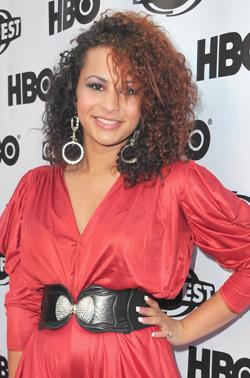
Harmony Santana, Getty ImagesHarmony Santana, Getty Images

This year the first person I’d like to highlight is actress Harmony Santana. Many of you who are into films, especially independent films by people of Color may have already heard of Harmony Santana as she is the transgender Latina who was cast in the film Gun Hill Road as the lead character: a transgender Latina.

The film was one of the largest grossing independent films in the United States. It shares the story of Vanessa a trans-Latina poet whose father Ernesto (Esai Morales) is released from prison after several years of being incarcerated. Vanessa lives with and is raised by her mother Angela (Judy Reyes) and experiences challenges when her father reunites with the family. Ernesto and Angela work with and find ways to support their daughter as she establishes herself as a member of the family and community. This is not a review of the film, I wrote one of those and if you want to hear my perspective on the film, some critiques and some adoration you can read it in full here.

Harmony Santana is a young Latina whose existence is a reminder to us all that that the reproductive justice movement must be a space for all people in our community to be welcomed and help do important work. Including youth and trans people strengthens our community, work, and impact. They are essential to our community and recognizing the ways some of the work we may do may not be as inclusive as we think is an opportunity to make lasting changes.

She is a young person who is a representative of a community that is often ignored oppressed and excluded; even by those who claim to be allies. For many of us working within our communities, we may have come into contact with youth who have similar experiences to Harmony. Indiewire’s reporter Nigel M. Smith reports that Harmony was living in a LGBTQI group home in Harlem called Green Chimneys. Growing up one of 13 children in a Puerto Rican-Dominican home, Harmony is a Bronx native who hasshared in several interviews that her relationships with her siblings and mother are strong, yet she remains estranged from her father. She’s not just an up and coming actress, she is many of the trans youth who experience homelessness and isolation. She is also representative of the youth who survive and thrive when discovering their worth and space in the community.

I’m thankful I am able to be a witness to Harmony Santana’s work, to see her thrive as a young person, but also as a leading Latina in film. She and her work are a part of and advocate for media justice. During an interview with Rev. Chris Carpenter at Movie Dearest, Harmony gave the following advice for trans people “Be yourself, be happy, and have hope in your family; they might not be supportive now but it takes time.”

Friday, September 30, 2011

Media Literacy At Work

cross posted from my Media Justice column

It’s been a while since I wrote about using media literacy skills, one important step towards understanding and creating media justice. I really enjoy this article by Elizabeth Thoman at the Center for Media Literacy as it outlines what media literacy is and its various components. As I wondered what to write about this week, I realized that I had been thinking about a segment I watched this weekend on 60 minutes. I’ve decided to share some of my questions and analysis to show how I use my media literacy skills to examine the media I’m consuming. One of the things I’d like to highlight is that different people experience the same media message differently and I know this may occur and I welcome it. So, if you have a different or other response to the media please share it! I wrote this article before writing this introduction, so there may be a more conversation style of writing below.

Did ya’ll see this past Sunday’s 60 Minutes? It had some interesting stories. One on a white supremacist militia leader who was murdered at close range by his 10 year old son (not on the rise of white supremacist militias). Another story was about the creators of South Park, but it was the first story about NYC Police Commissioner Ray Kelly speaking about what the NYPD have done since September 11th, 2001 to make the city “safer.” Here’s the entire segment to watch (sorry no transcript). I found myself using a lot of my media literacy skills and focusing on media justice at the same time. The story is called “Fighting Terrorism in New York City.”


It’s important for readers to know that when I watched this I was with a group of racially Black New Yorkers who ranged in age from mid-thirties to mid-sixties (I being one of the youngest folks there). All of us identify as radically left leaning as well and I’m sure others may identify us as “radicals.” As we watched, I had a LOT to say, but said it mostly under my breath as the room was very silent as we sat and watched. I want to share some of my personal thoughts as well as some of the conversations that occurred during commercial breaks.

One of the first things discussed was the mispronunciation of the word “hierarchical” by Commissioner Kelly and then followed by the journalist. This occurs at the 2:42 mark if you want to go back and hear. We wondered what does that mean when the journalist, who probably knows the proper way of pronouncing that term, mirrors what their interview subject states, even if it’s wrong? Is this a good thing? A sign that the journalist was listening and centering the interviewer? Or is this poor choice? I’m still not sure where I’m at on this because often I think when folks mirror slang or terms that a community has created, especially when youth-centered, it becomes almost a performance of that term/word when it is mirrored. What do others think?

The counter terrorism division that was created in NYC was the focus of the segment. As I shared in a previous post regarding coping and healing during September 11th, I was here in NYC at the time, and have returned and witness first hand the work of the counter terrorism division. In the beginning of the segment we are told that NYPD are “armed like soldiers” and they are! Now, seeing ginormous guns in the hands of NYPD where I may go in the city does not make me personally feel more safe. Instead it actually makes me more tense. It triggers memories I have of visiting Puerto Rico during one of the height of the US war on drugs in the early 1990s where military occupied Puerto Rico and armed military men were pulling over random cars and searching them. This is a jarring experience to have and witness at any age. Yet, this is what may spaces such as Penn Station has turned into in NYC.

In the piece we learn that the NYPD is working with the secret service, military, FBI, federal emergency management, state and local first responders, but not the CIA. The absence of the CIA was something we discussed as well. Reports citing that the NYPD has been working with the CIA since 2002 are not new. What may be new is that folks didn’t realize this is not something the CIA is allowed to do: collect information/spy on “Americans” (I put “Americans” in quotes because America is NOT just the US, geographically speaking America includes Canada, the US, Central and South America. Yet, when people in the US use it, the purposes are primarily to mean US citizens or people living in the continental US. I put this note here because it is important to show that even the media we consume don’t always get it “right” or craft language in a particular way. Language is powerful!) Yet, this is exactly what has been done for almost 10 years. Currently the CIA is investigating the legality of working with the NYPD to focus on Muslim communities.

$3 billion has been spent to prepare NYPD for “every kind of threat” including having the ability to “take down a plane.” This includes training assault teams in specific ways like the hostage situation in a subway car we were shown. But, I wondered: why are there NO dummies or masses that could be people in that space, which is the reality of subway cars in NYC? How is this a good training simulation without having the knowledge that folks may be occupying space, screaming, terrified? This reminds me of the Maryland driving test where you take the driving test in a closed parking lot versus on the road where people actually drive in real life in this country!

Another part of the segment I struggled with was how it is impossible to walk a block in lower Manhattan without being monitored. There are currently 2000 cameras and soon to be 3000 that feed into the system created to monitor us. This alone a $150 million project. The artificial intelligence created, we are told, can identify packages that are left in a place too often (as we have been socialized for ten years to “if you see something say something” yet often there are no ways for us to “say something” until we are off the subway and find an employee, which the MTA has limited due to financial burdens). Now, the technology can also identify the description of a person. The example used was a person wearing a red shirt, but I wondered how sophisticated this was, as in would it racially profile people as well? This reminded me of the movement of young men of Color wearing white t-shirts all over their communities to make racial profiling harder for officers. I also wonder, if it can identify people why do we still have so many missing person’s reports in that area? Oh, right this is only for counter terrorism.....

And that counter terrorism effort is not just in the US, it’s abroad, where other NYPD are located. They are said to be “gathering intelligence all over the world” including Jordan, France, Madrid, Tel Aviv, London, Toronto, Singapore, and Dominican Republic. From a globalization perspective these countries must have agreed to have these folks placed in their country right? Well, that’s not stated, but i would like to think that’s the case and Commissioner Kelly would have not discussed things in this way if they were not agreed upon through a collaboration between nations.

The parts of the segment that I’ve also experienced where when NYPD signal subway cars to stop so that they can eyeball every passenger before letting the train go. Many folks may say all of these things are efforts to keep us safe, that who cares if we are a few minutes late for whatever we are going to do. But this is still racial profiling! What exactly are these officers looking for, or whom? What is considered a suspicious package or person? I really do still believe this is a form of institutionalized Islamaphobia.

One of the aspects of the counter terrorism efforts that the journalist was impressed by was one that I found to be deeply troubling. This was the NYPD Cricket group that consists of 12 teams and 200 Pakistani youth. The officer who coordinated the league stated that cricket is national pastime of Pakistan. Yet, cricket is also the sport in many Caribbean countries, so why the focus on Pakistani youth? Journalist stated that “Hundreds of Muslim immigrant parents have kids playing for the NYPD.” This is impressive to our journalist and media providers? This leaves me frustrated.

Finally, this whole conversation about being “lucky” in catching the bomb that was in Times Square last year. That wasn’t because of the $3 billion training or technology, that was luck? So then how do we know any of this will actually ever work for reasons it’s been created? We just heard a 12 minute discussion and presentation on how this new approach is great and impressive, yet we are still holding onto luck. Again, I don’t feel any more safe after watching this segment.

I learned that the US and NYPD define terrorism in a very rigid and specific way. Terrorism is not connected to the number of rapes, domestic violence, or hate crimes that are committed often by US citizens towards and upon other US citizens. Oh the irony of it all! What would our society (at least in lower Manhattan) look like if these resources shifted to social issues and experiences that a larger group of people experience and are impacted by? What more are we willing to give up regarding privacy and safety for a city and government counter terrorism plan of action? We’ve learned that the Patriot Act has resulted in more arrests for drugs (over 1500) than for terrorism (15).

What are your thoughts about how counter terrorism efforts have been presented and shared in our communities? Are there other aspects that came up for you while reading and watching the clip? If you live outside NYC what are ways your communities have seen counter terrorism efforts? What are the advantages and challenges experienced?

Sunday, September 25, 2011

What I Learned When I Made My First Zine

cross posted from my Media Justice column

I made my first zine ever in life over last weekend. It became the program for entrepreneur, author, and artist Erika Lopez’s east coast The Welfare Queen tour that is on limited run in NYC for Latino Heritage Month. Erika had given me all of her hard drives that had all of her artwork on them and that was amazing!

A zine is very do-it-yourself (DIY) form of media making. Some folks say zines are similar to magazines where they have stories, interviews, poems, words, images, and other forms of text similar to how we read books and magazines. Sometimes the text is handwritten, but it is definitely a way for the use of radical typography. So, even though I was making a program for an off Broadway show, it worked out.

I’ve read so many zines, have many friends who create them, and have toyed with the idea of creating one and this seemed like a good time. One of the ways I found this to be a useful activity was that I only had to credit all of the artwork to one person, Erika. That made things so much easier, as does having access to all of her artwork. When the artist supports you using their art, it’s such a great way to begin.

I asked one of my homegirls Aaminah (whom I’m trying to get a Media Makers Salon interview with where she shares her background, interests, and experiences creating zines) for some mentorship and guidance for creating the zine. She sent me to this post she created online about making zines. I specifically wanted to know how to set up the pages for making copies of the zine (my zine was all black and white).

Here are some lessons I learned:

1. For the zine I was making, spelling is important (unless part of your media making is to challenge conventional modes of spelling and language/grammar rules).

2. It’s important to pace yourself while creating the zine. This means setting realistic goals. For me this was also connected to planning and printing things out well.

3. Organization will really help you create the product you want. I knew I had to have certain elements, logos, and text in the zine, so I made sure that if I didn’t want to use my own printer and ink to get to campus or the library early.

4. Embracing a “gritty” look, or not being adverse to such, will help when you need to make copies and end up at a copier that is less expensive.

5. Making edits after first run is not as frustrating as it could be, especially if the zine has a “gritty” feel and various fonts. I had to make 3 changes and each was easy since I cut up another one and made the edits and copied them.

6. Sometimes big corporations who specialize in copying and printing mass quantities are worth the extra pennies per page. I tried to make copies low budget at first but the machine kept breaking and the paper getting caught. It took me almost 15 min to make 50 copies of one page. Then I went to Staples, added money to my copy card and made 50 copies in less than 5 minutes of all the pages of my zine! It costs more, but it was worth it to save time, have folks there to help, and know what I’m paying for is quality and these services.

7. Text and typography are important to keep in mind especially if you want to reach many folks and make an accessible zine. For example, I knew I had to save some space, and I know my zine has small lettering, so folks who have vision differences will not be able to read my zine as well/quickly as folks who don’t have vision challenges.

8. Make sure to credit folks, especially if you use their artwork and text. I included an acknowledgement page that helped me to also identify folks who were helpful in the process and needed to be included.

9. Keep a master copy for yourself and file it away. Also keep one copy for yourself as well. My zine was not for sale, but if you are selling your zine keeping these makes additional copies useful and helpful.

10. Give yourself credit. It wasn’t until Erika said “plug yourself - you are making it” that I thought to write that I had created the zine.

What are some things that you have learned as you have created your zines? What are some things you’d like to know about zines (for my media makers salon with Aaminah)?