Showing posts with label community. Show all posts
Showing posts with label community. Show all posts
Tuesday, July 31, 2012
From the Archives: Communal Survival: Holding Each Other Accountable and Healing
I wrote this at my Media Justice column in September 2009. At that time I was not cross-posting here. So, here it is. I'm really proud of this piece.
This is a difficult article for me to write. I’m still struggling with this story and my thoughts around it, but think it’s important to discuss what is occurring. Roxanne Shanté, have you heard of her? There’s been a ton of conversation, emails, postings, tweets surrounding the NY Daily News article about her. That was quickly followed by another article in Slate magazine that basically said everything in the NY Daily News article was a lie and that she doesn’t have the education she said she did.
As one of the few female rappers in the 1990s, I grew up listening to Roxanne Shanté and still do today. I’ve struggled with this for a week now. I’m not sure where my struggle lays, is it that I’m not ready to debunk her work? That I’m hurt she has lied? That I worry about how survivors are treated in our society? I think it’s all of this and so much more that I have yet to find the words for.
The part that gets me at my core is that the media so easily seeks to bring down a Black woman from a working-class background that is serving her community. This is who I am. This is what I do. This could be you. This could be me.
I’m not sure people realize how frightening it is to see a Black woman from a working-class background who is an activist be questioned, investigated, and eagerly called a liar. Since the Justice Sotomayor hearings , I have a difficult time recalling a more recent time I allowed myself to pay attention to such an attack. My last vivid memory of witnessing such questioning, interrogation, and name-calling was surrounding Anita Hill. Perhaps this void in my memory is my way of coping with the multiple abuses women of Color endure in the public eye.
When I read what activist and journalist Jeff Chang and Wayne Marshall wrote about the situation I realized how important it is to be conscious of what messages are being constructed. Several of the comments responding to his article are by many people I know and read on a regular basis online. Yet, I find it very unsettling that one of the main areas Jeff points out regarding Shanté’s claim to higher education was a history of domestic violence, is used as fodder for people to say “still, where’s the proof?” Only a handful of commenters understood/stand the enormity of being a woman of Color who is a survivor of violence and what coping with such experiences may be for us.
We are socialized to believe journalists are supposed to be unbiased. We know that is not true. We all have biases. But for some reason neither article discussed her race and how it intersects with all the other aspects of her identity: gender, class, citizenship status, geographic location, ability (to name a few). I find this sad that people are using race neutral analysis in their reporting. Author of the second article that debunked Shanté, Ben Sheffner, asked me on twitter “What does Shanté's race have to do w/whether the story she told the Daily News & others re Ph.D/Warner Music was accurate?” My reply to him was: “its a pretty big deal. i'm not down for race neutral approaches. we are complex & all our ids matter. look up intersectionality.” To which he responds, “The facts are the facts. No one has successfully challenged ANY facts reported in my Slate piece. Her race doesn't matter.” My response is here. And then he asks about intersectionality. You can read the rest as both our accounts are public and I’m sure you’ll get a kick out of him quoting Daniel Patrick Moynihan, whose “facts” have been debunked by the use of intersectional analysis by scholars of Color all over the world. The only time each of the two pieces mentioned her race was when discussing whom Shanté works with and were identified as “urban African-Americans.”
As someone who did the traditional route of higher education and has two master’s of arts degree (you can’t write MA squared on business cards), I don’t really care about the paper. I don’t care about if she has a PhD or not. Yes, this may not be a popular position, yet that’s where I find myself at this moment in time. I understand lying about obtaining education is wrong. And I see very clearly how much this lie has affected our community. Many people and several of my friends have rightfully stated that this particular lie does more damage than good.
Here’s where I struggle: I know several social workers, camp counselors, hotline counselors, doulas, and the like who have not gone through the traditional modes of higher education and are doing amazing work! What does this tell us about higher education and those who have access to it? I can speak to the fact that many programs do not always teach you how to counsel, they teach you how to critique and do research. These are very different approaches to what is considered “work.” Many of the counseling experience I gained was not only during my higher education career, but through my actual lived experiences of working with people, along with, not only, reading books, going to class, and writing papers.
I’m not ready to debunk Shanté’s work because she lied about her educational background. I understand the importance for many, and I’m not saying having a degree does not make a difference it does for many. Yet, I can’t help but feel compelled to remind us all that coping, care, support in our everyday lives comes from people who may have no specific or focused training on providing such care. Think about how you use your friends and family to help you through decisions and experiences. This, for me, is an informal yet crucial part of our ability to cope, mentor, and build community.
Shanté choose to call herself “Doctor” may be misleading, as we do not know the entire story (Chang and Marshall speak to this). Choosing to question if the work she has done in our community as valid is understandable. Yet, if Shanté helped one person or 100 people, she has succeeded in my opinion. As a mentor to a young woman for over 15 years, I know that mentoring is no joke! It is hard and rewarding work. If we choose to ignore her work in the field of mental health, I know we can’t ignore her work as a mentor. Many of us witnessed it when we watched Vh1s airing of EgoTrip’s Ms. Rap Supreme. If she is helping women of Color as we saw in the show in whatever capacity, mentor, counselor, advisor than there is reason to call her a success as it’s too often that women of Color are ignored and forgotten. People too easily forget that not all women are treated equally in this country . Her work matters.
We can hold each other accountable and still support one another. I see the importance of respecting her wishes to not speak on her surviving violence (can people please realize the importance and power in the term SURVIVOR over “victim”) and how this may connect to some of the lies that have been presented. There are ways of healing, coping and finding support and community that are far more complex. I really want to hear what others think about this topic and also how we as communities of survivors can support one another without hurting each other.
I know Roxanne Shanté is a survivor and she too will survive this, after all she does identify as the “untouchable Queen Pin, the most relentless in the business. Makin’ money without men, Sittin’, stackin’ her riches.”

Saturday, June 6, 2009
Friday Nights in AZ
Elena picked me up from the Sex Conference on Friday and we went straight to the Heard Museum to hear a panel on art, gender, and sexuality. I was just really excited to hear women of Color speak on these topics, especially from after the last session I attended at the conference. I was also super excited to hear the Crafty Chica. Some of you may not know this but there are some folks who are just famous to me, she is one of them, so when I saw her walk in I got all uber nervous and chickened out on talking to her! For those of you who have received my gifts of candles, it was her book that inspired such art!
There was the gorgeous DJ Brazillia spinning great music prior to the talk. I saw my favorite Mexicans who I had not seen in years! And we took our seats for the presentation. I rather not hash out the specific discussion of the panel, but I do want to add that Crafty Chica was the best on the panel (of only 2 women of Color out of the 5 women). I asked a question about how women can control the gaze and make choices to engage their sexuality through performing their gender expression in a particular way and two outspoken panelists were very condescending in ways that I wish I could forget from my days as a graduate student in a Women’s Studies program.
They argued that women can not control the gaze when working in particular spaces. I found this ironic for second wave feminists to state since choice and agency are at the heart of that time period. They tried to “school” me, but what they really did was misunderstand what my question was. When I didn’t back down, and told them that I’m asking about “next steps” from the “not controlling the gaze” to a space where women have choice and agency, then what? Can they speak more about that? Only the Crafty Chica did.
What does it mean that in a space devoted to this topic, a field of which I’ve been an active part of for over a decade, two panelists can so comfortably tell me I’m wrong and do not know what I speak of? What does it say about them, as women, as artists, that they cannot allow themselves to imagine a space where women do and can have such choice and agency?
After the session my hermanos y hermanas said they “understood my question” and that it was a “good” question. As if I were a magnet, two White women approached me and said they agreed with what I had to say, that they appreciated it, and wanted to engage me more. I shared what I wrote above. I also wondered to myself why they hadn’t said these things within the group versus with just me on the side. To be fair, one woman had spoken briefly about her courtship practices, but at the time I could not see the connection to my query.
This always seems to happen to me. Folks approach me after the conversation is over to tell me they agree with me. They appreciate my comment. They like my perspective. Yet that support, encouragement, community is not there the moment shit hits the fan and I get all the backlash. Does it matter that people approach me after the verbal lashing?
Sometimes it does and sometimes it doesn’t.
This time it did.
There was the gorgeous DJ Brazillia spinning great music prior to the talk. I saw my favorite Mexicans who I had not seen in years! And we took our seats for the presentation. I rather not hash out the specific discussion of the panel, but I do want to add that Crafty Chica was the best on the panel (of only 2 women of Color out of the 5 women). I asked a question about how women can control the gaze and make choices to engage their sexuality through performing their gender expression in a particular way and two outspoken panelists were very condescending in ways that I wish I could forget from my days as a graduate student in a Women’s Studies program.
They argued that women can not control the gaze when working in particular spaces. I found this ironic for second wave feminists to state since choice and agency are at the heart of that time period. They tried to “school” me, but what they really did was misunderstand what my question was. When I didn’t back down, and told them that I’m asking about “next steps” from the “not controlling the gaze” to a space where women have choice and agency, then what? Can they speak more about that? Only the Crafty Chica did.
What does it mean that in a space devoted to this topic, a field of which I’ve been an active part of for over a decade, two panelists can so comfortably tell me I’m wrong and do not know what I speak of? What does it say about them, as women, as artists, that they cannot allow themselves to imagine a space where women do and can have such choice and agency?
After the session my hermanos y hermanas said they “understood my question” and that it was a “good” question. As if I were a magnet, two White women approached me and said they agreed with what I had to say, that they appreciated it, and wanted to engage me more. I shared what I wrote above. I also wondered to myself why they hadn’t said these things within the group versus with just me on the side. To be fair, one woman had spoken briefly about her courtship practices, but at the time I could not see the connection to my query.
This always seems to happen to me. Folks approach me after the conversation is over to tell me they agree with me. They appreciate my comment. They like my perspective. Yet that support, encouragement, community is not there the moment shit hits the fan and I get all the backlash. Does it matter that people approach me after the verbal lashing?
Sometimes it does and sometimes it doesn’t.
This time it did.
Tuesday, June 2, 2009
Part 2: One Persons “diversity” is Another’s Klan Rally

Go read part one of my adventures in Arizona at the Sex Conference.
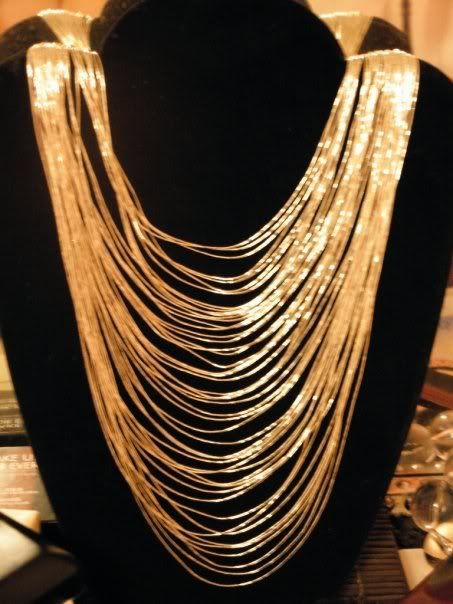
Friday had arrived and I was ready to attend the conference. I wore one of my favorite dresses for the warm weather. It is low with a v-neck but conceals my tattoos enough that I’m not stared at even more than I already am. It also allows me the opportunity to wear my favorite liquid silver necklace I got on my first trip to AZ in February.
In the package that I waited a long time for was information on the conference, my nametag and pronoun stickers.


There was a continental breakfast so that saved me money, which I appreciated. The first session I went to began at 8:30 am and focused on female survivors of cancer. The presenter focused on ways that clinicians and physicians can assist survivors in their body image challenges. I learned a lot in this one-hour presentation. The presenter had a UKish accent and was very interactive in her presentation. My only note of how it could have been improved according to the evaluation form was for the presenter to discuss keloids for women, especially women of Color at the site of their incision and surgery.
I chose to wait in line to speak with the presenter but decided against it when I realized there were several of us who wanted to speak with her. I moved onward to my next session in the sea of White bodies. I told myself: “I knew what to expect, I knew there would be limited faces like mine, and I knew to take deep breaths to cope with the space.”
This session was on sexological worldview and how sexologists come to create and utilize a world view. It was at this session that I saw the first men of Color at the conference. This session was very engaging. The presenter was a peer, about my age who had just earned his doctoral degree (EdD) and was sharing part of his finding from his qualitative analysis for his dissertation. The presenter Justin Sitron, is now full time faculty at Widener University, which is one of the only schools on the east coast that provides such higher education training in sexology. I have more to say on this as the facilitator of the session was his mentor and an important figure in the field of psychology and sexuality. Why do women of Color I know not have this same type of support by our women of Color faculty mentors?
He interviewed about 30 sexologists by asking those on the AASECT listserv to meet with him. It was a very colorfree sample with only 5 participants identified as “non-white” (which we know could mean anything). He provided the worldview as a process similar to the process I’ve heard when speaking about cultural competence. He was very receptive to feedback and inquires about his work. I asked him about his sample, reflexivity, how his gender identity and expression may have impacted his sample. I shared how race and class was not ever mentioned in the sample and information presented and how that may speak to where the sexological field in the US is currently. It was this session that I heard a White woman say that this was the “most diverse AASECT conference she has been to in 9 years.” This shocked me. After the session a woman from the SAR came up to me as we exited sharing that I had very good questions.
My next session was on disability. There were several images used that I found encouraging of people with disabilities loving and living. In addition, a conversation about feminist theory, disability theory, and transhuman and embodied theories which I had not been familiar with until I came to this session. I also learned: when people with disabilities adopt children with disabilities they proactively embrace discussions of sexuality, disability, and their children being sexual beings. I don't know many able-bodied parents who do this! In addition, I learned a few new things about Helen Keller: She was an anarchist and had many lovers. Why do they exclude that part of her history in stories about her?
Although lunch was catered I chose to have a quiet lunch in the hotel restaurant. They used real fresh sea salt on their french fries. I sat by myself and admired the older woman across from me who was doing the same thing. The men who were working at the restaurant were pleasant and helpful. It is the south after all, even if it is the southwest. After lunch I decided on my last two sessions, both the only sessions about race that day. The first was on teaching race, class and gender within the context of sexuality and history, the second was about how African American women use e-health to obtain information on sexual health.
I saw some women from the SAR waiting around to attend their next session, which was not the session I was going to. The session on teaching using intersectional frameworks and theories (terminology the presenter never mentioned) was a very 101 level for me. After all, I have taught these subjects for my entire teaching career (over 10 years) simultaneously versus in silos. This is the way I teach. The presenter was an older man who has been in the field for decades and just recently received AASECT certification. This I appreciated hearing him say as it is my situation. He was open to questions during his presentation and I took advantage of that.
Unfortunately, I was worried that his take on history started with exploration, conquest and colonization. When I asked him about this he said he only had 12 days to prepare for his class. The he went to a large corporate bookseller and purchased the first book he saw on sexuality and history (I can only imagine how colorfree the text is). I did not come back and share that I only had two days to put together a similar syllabus and was equally if not more successful in incorporating the themes in various forms. I asked him how/if students responded to him as a White man teaching about race, gender, class and sexuality as my students often say in course evaluations that “this is a class on sexuality not on race” or that in my class there was “too much focus on race.” I take these evaluations to be a compliment on the colorfree education they received and how my teaching challenges that comfort and expectation.
One thing I did appreciate about this session was that I met so many people. There were educators in the room that I met and know I will have in my circle of colleagues for a very long time. One person came to speak with me as her question was about Margaret Sanger and how her students are shocked to learn her role in the Eugenics Movement as this is rarely discussed. I shared with her that my students have the same reaction and we spend a week on the topic and read parts of Jennifer Nelson’s work on nationalist communities in the US working towards reproductive rights in the 1960s and 1970s. She uses the same text and we have the same student reaction. Interesting how one article can trigger such a response in students.
I also met women of Color who were instructors and had the same challenges I did with students claiming they spoke too much about race. We exchanged cards, sat next to one another and prepared for the second session on race, which was in the exact same room. Prior to that session starting I went to sign in and met Judith Steinhart. She came up to me and told me she had heard me at the Guttmacher Exchange and did not have a chance to talk with me after my questions. We swapped information and went to our seats. Judith was sitting in the same session as I was as well.
The final session about African American women was amazing! I thought it could have been two hours versus the one it was given. A presentation filled with examples of media images, how communities access information, how women of Color have multiple messages sent to them, and how we read into them. This was a session I could have been a part of for the entire day. This is where the most women of Color and people of Color were at during the conference and I was there too! I can’t begin to share how rejuvenated I felt. I originally felt hurt, ignored, invisible, exhausted, isolated, and in the wrong space. I left feeling the complete opposite after just 2 hours. If you don’t know of the website Our Health Our Lives you do now.
Having community makes a difference.
Part 3 of the Sex Conference will discuss what has changed, what work is being done and the activism that’s taking place as we speak for diversifying the field of sexology in the US.
Subscribe to:
Posts (Atom)